ADVENTURE AWAITS... AND WE HELP YOU FIND IT

Reflect On Purpose
Some things went right this year, and some things went wrong. That feels like a constant thread when reflecting at year’s end. Often, years don’t feel like huge wins or huge losses.
Instead, continual progression is a really good thing to notice at the end of the year. It’s easy to think, If I didn’t have that one setback, things would be better. But what about all those incredible moments that truly moved me and my business forward? Every one of those could have gone the other way. Through strategy, work, and a whole lot of luck, we ended up with mostly wins.
Cohesive Leaders take time at the end of the year to check systems and reflect on both wins and losses.

The Market Doesn’t Care What You Love
In my last Leading On Purpose blog post (click here to read), I disagreed with Scott Galloway. Now I’d like to share something we agree on.
In this clip, Scott shares something most people don’t want to hear. He says that while passion is exciting, talent pays the bills.
And honestly? He’s right. The market doesn’t reward what feels good to you. It rewards what you do exceptionally well and can deliver consistently.
I’ll add another layer to this: You don’t discover talent by sitting still. You find it by trying things.

Why Virtual Team Building Isn’t Just for Remote Startups Anymore
Remember when virtual team building was something only scrappy startups did because nobody had an office yet? Cute times. Fast-forward to today with hybrid schedules, distributed teams, and employees logging in from three time zones and a dog-occupied kitchen table have become business as usual.
And with that shift comes a not-so-subtle truth: virtual team building isn’t a temporary fix anymore — it’s a core piece of healthy company culture.
In fact, the organizations that are thriving right now aren’t the ones waiting for everyone to “get back together in person.” They’re the ones investing in connection where people actually are. Online. On calls. Across states. Sometimes across continents.

We Don’t Need Crutches to Connect
I recently stumbled across this video on my For You Page and I have some thoughts:
https://www.instagram.com/reel/DRcXwy6jN9H/?igsh=cXd4b2RreHFjZG41
Scott Galloway makes a wildly sensational claim here that remote work is supposedly dismantling an entire generation. According to him, the office is the sacred incubator of career growth, friendship, romance, resilience, and every good thing in between. He even goes as far as tying the anti-alcohol movement into the downfall of social connection.
Strong take, BUT not exactly the full picture.
So let's talk about it.

Lessons I Bought With a Pay Cut
$96,000.
That was how much money I made in my start-up sales job right after I dropped out of college.
$10,000.
That was my entire income in my first full year of running On Purpose Adventures, plus whatever I scraped together from demolition work and random gig projects.
Can you guess which year was one of the best of my life?

Don’t Fix It. Facilitate It.
I recently had a post go viral on LinkedIn where I shared a video from Keith Barry, the mentalist and performance expert.
Keith's daughter hit a roadblock with a school project. Instead of telling her how to fix it, he guided her through a process:
- Doodle freely for a few minutes.
- Look for new connections between the drawings.
- Then walk away from the problem. Go rest, listen to music, anything but think about it.
When she came back, she solved it. Keith still doesn’t know what the problem even was. But the point wasn’t what she solved. It was how she solved it.
This system created an "aha" moment through reflection and incubation.
And it's something leaders need to use more often to help their teams.

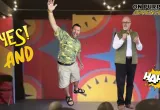
We create Ha-Has that become Ahas!
When was the last time your team really laughed together?
Not a polite chuckle on Zoom. Not a nervous laugh during an icebreaker.
I mean the kind of guffaw laughter that makes your sides hurt and your cheeks sore from smiling so hard.
Laughter has long been called the best medicine, but it turns out it’s also one of the most underused leadership tools.

Why Hands-On Matters
Have you seen Chris Hemsworth's show Limitless on Disney+? I highly recommend. While enjoying the extreme stunts and peak physical fitness is fun, the show is a great reminder that stretching yourself, mentally and physically, is essential to growth and longevity.
Hemsworth, aka Thor, has plenty of money and could spend the rest of his life taking it easy. He could relax with his family, go surfing, act when he feels the inclination, and enjoy life at his own pace. But that's not the drive he feels. Chris understands that not challenging himself could limit his potential, reduce his vitality, and ultimately shorten his lifespan. Pushing boundaries, learning new skills, and staying active are his ways of ensuring he not only lives longer, but lives fully.
Popular Articles